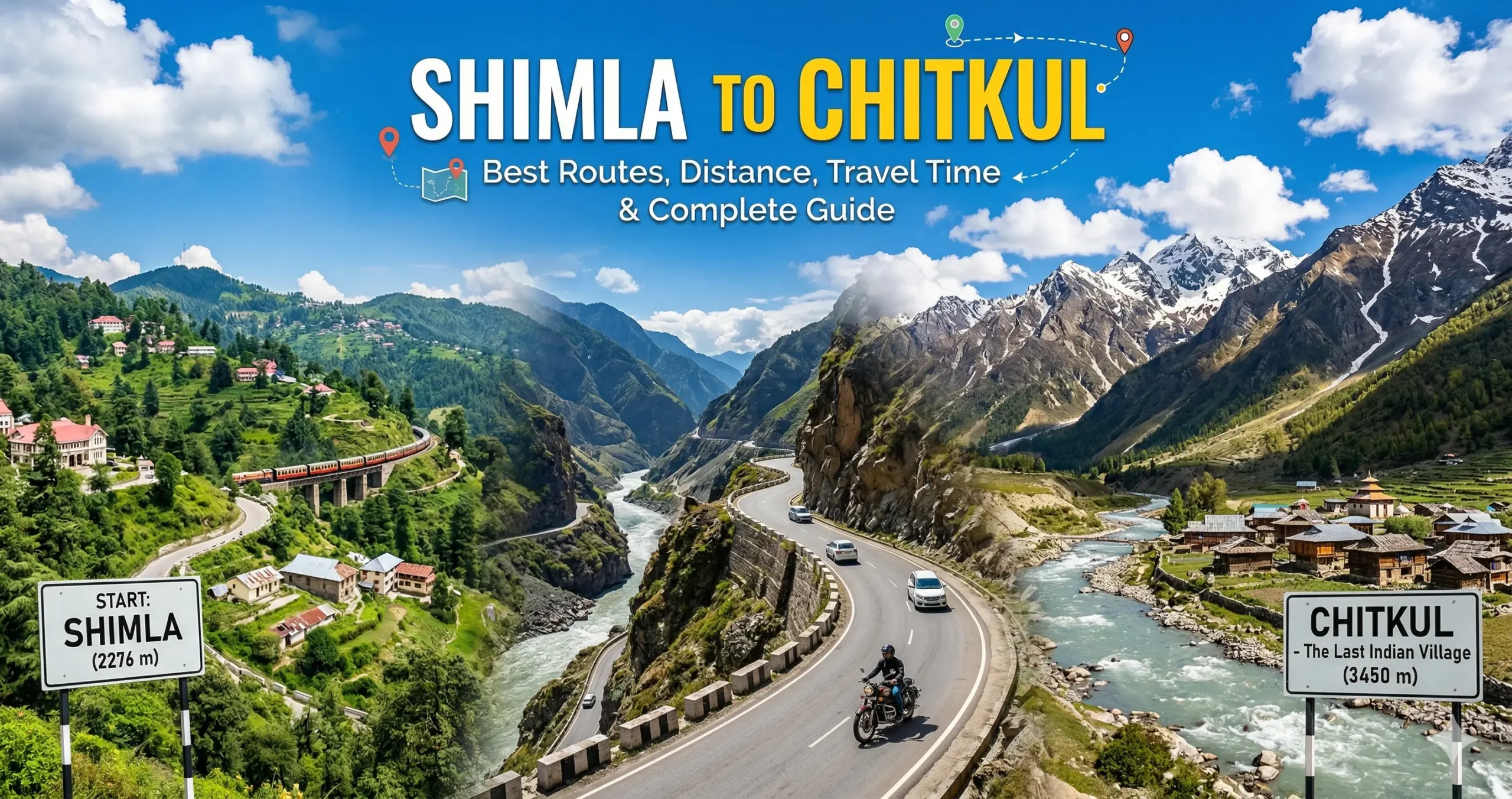
Leaving Shimla’s pine-covered slopes behind and heading to Chitkul is a real adventure. Chitkul sits deep in the Kinnaur Valley, along the Baspa River, at about 11,300 feet. It’s known for raw Himalayan views, wooden houses, and a quiet that’s hard to find elsewhere. Here’s everything you need to plan the trip well.
- Distance: ~245–260 km
- Travel Time: 9 to 11.5 hours (non-stop drive)
- Best Mode: Road (only viable option beyond Shimla)
The Classic Hindustan-Tibet Highway (NH5)
The Classic Route: Via Narkanda (NH5)
Route: Shimla → Kufri → Fagu → Narkanda → Kingal → Rampur Bushahr → Jeori → Karcham → Sangla → Rakcham → Chitkul
This is the route most first-time travelers and photographers take, especially in summer.
What you’ll see:
- Apple orchards near Narkanda
- Deep gorges along the Sutlej River
- The Taranda Dhank stretch, which is thrilling but needs careful driving
- A beautiful entry into the Baspa Valley
How the road changes:
- Shimla to Narkanda: excellent road
- Narkanda to Karcham: moderate, with some rough patches
- Karcham to Chitkul: narrow and risky, so take it slow
The Basantpur and Kingal Bypass (The Low-Altitude Route)
Route: Shimla → Mashobra → Basantpur → Suni / Tattapani → Kingal → Rampur Bushahr → Karcham → Chitkul
Best For: Winter travel, avoiding snow & traffic
Why Choose This:
- Lower altitude (less snow risk)
- Avoids Kufri/Narkanda congestion
- Warmer climate in winters
Comparing the Two Routes
| Route | Key Stops | Distance | Time | Best For |
|---|---|---|---|---|
| Via Narkanda (classic) | Kufri → Narkanda → Rampur → Karcham → Sangla | ~245 km | 9–11 hrs | First-time travelers, summer trips |
| Via Basantpur (lower altitude) | Mashobra → Suni → Kingal → Rampur → Sangla | ~260 km | 10–11.5 hrs | Winter travel, avoiding snow and traffic |
Taking the Bus
Direct Bus to Sangla
- Limited HRTC buses from Shimla early morning
- Duration: 10–12 hours
- Cost: ₹500–₹600
- From Sangla → Local taxi/bus to Chitkul (22 km)
Bus + Shared Cab (Most Practical)
Step-by-step:
- Take an HRTC bus from Shimla to Reckong Peo or Kaza
- Get down at Karcham
- Hire a shared cab to Sangla/Chitkul
Total Time: 11–13 hours
Cost: ₹700 approx
Why it works best:
- Flexible timings
- Regular availability
- Easy connections
Train and Air Travel
- Kalka Shimla Railway ends at Shimla
- Nearest airport: Shimla Airport
Online Railway Ticket Reservation
Conclusion: Beyond Shimla, road travel is the only option.
Overall Travel Options Comparison
| Travel Mode | Strategy | Travel Time | Est. Cost (One Way) | Best For |
|---|---|---|---|---|
| Personal Car / SUV | Drive via NH5 (Narkanda) | 9–11 Hours | Fuel: ₹2,800 | Enthusiasts wanting ultimate freedom; high ground clearance is highly recommended |
| Private Taxi | Hire direct from Shimla | 9–11 Hours | ₹7,000–₹10,000 | Comfort & safety — best if you are not experienced with single-lane cliff driving |
| Bus (Direct to Sangla) | Early morning HRTC | 10–12 Hours | ~₹500–₹600 | Budget travelers wanting to skip the hassle of changing buses mid-way |
| Bus + Shared Cab | HRTC to Karcham + Sumo | 11–13 Hours | Bus (₹500) + Cab (₹200) | Backpackers wanting the most flexible public transport option throughout the day |
Chitkul Month by Month
Chitkul is most comfortable during the main travel season, and the experience changes a lot by month. A practical month-wise guide is:
- April to June: Pleasant weather and reliable road access.
- July to August: Monsoon risk, possible landslides, and slower driving.
- September to October: Best photography season with clear skies and excellent views.
- November to March: Snowfall, cold conditions, and possible road restrictions.
If your goal is comfortable sightseeing and photography, September and October are often the most rewarding months.
Food & Local Cuisine
Include:
- Siddu
- Thukpa
- Momos
- Rajma Chawal
- Kinnauri dishes
- Local cafés and dhabas
Network & Internet
- BSNL: Usually the most reliable option here.
- Jio: Limited coverage.
- Airtel: Patchy at best.
- Internet access can drop out entirely during bad weather, so don’t rely on it too heavily.
Fuel & EV Charging Information
- The last dependable fuel stations are in Rampur and Reckong Peo.
- There’s no EV charging setup in Chitkul, so plan accordingly if you’re driving electric.
- Fill up before entering the Baspa Valley — options get scarce after that.
Good Spots for Photos
- Sunrise over the Baspa Valley
- The meadows around Rakcham
- The quiet lanes of Chitkul village
- Viewpoints along the Baspa riverside
Staying Safe on the Baspa Valley Stretch
- Start early, ideally between 5:00 and 6:00 AM.
- Try to cross Karcham before it gets dark.
- Avoid driving through the Baspa Valley at night.
- Carry cash — ATMs become hard to find after Rampur.
- Check weather and road updates, especially during monsoon and winter.
- Pack warm layers, water, snacks, and basic medicines.
Which Route Should You Take?
- Best Route Overall: Via Narkanda (NH5)
- Best in Winter: Basantpur–Tattapani route
- Best Budget Travel: Bus + shared cab
Questions Travellers Ask
1. What is the distance from Shimla to Chitkul?
The distance from Shimla to Chitkul is approximately 245 to 260 km, depending on the route you choose.
2. How long does it take to travel from Shimla to Chitkul?
It usually takes 9 to 11.5 hours by road, depending on the route. Travel time may increase due to traffic, landslides, or weather conditions in the mountains.
3. What is the best route from Shimla to Chitkul?
The best route is via Narkanda and Karcham on the Hindustan–Tibet Highway (NH5). It offers the most scenic and well-maintained road conditions.
4. Is the road from Shimla to Chitkul safe?
Yes, the road is generally safe, but the stretch from Karcham to Chitkul is narrow with steep cliffs. Avoid night driving and be cautious of landslides, especially during monsoon.
5. Can I travel from Shimla to Chitkul by bus?
Yes, you can take an HRTC bus from Shimla to Sangla or Karcham, then hire a local taxi or shared cab to reach Chitkul.
6. Is there a direct bus from Shimla to Chitkul?
There is usually no direct bus to Chitkul. However, limited buses run from Shimla to Sangla, from where you can continue your journey.
7. What is the cheapest way to reach Chitkul from Shimla?
The cheapest option is to take a bus from Shimla to Karcham or Sangla and then a shared taxi to Chitkul. This costs around ₹700–₹800 total.
8. Which is the best time to visit Chitkul from Shimla?
The best time to visit is from May to October when roads are clear. Winters (December–February) bring heavy snowfall and possible road closures.
9. Is Chitkul accessible in winter?
Chitkul remains accessible in early winter, but heavy snowfall can block roads beyond Sangla. Always check weather and road conditions before traveling.
10. Can I drive from Shimla to Chitkul in one day?
Yes, it is possible to drive in one day, but it is a long and tiring journey. Many travelers prefer stopping at Sangla or Rampur for a more comfortable trip.
11. Do I need a permit to visit Chitkul?
No permit is required for Indian citizens to visit Chitkul. However, always carry a valid ID as it is near the Indo-Tibet border.
12. Are there petrol pumps on the Shimla to Chitkul route?
Petrol pumps are available till Rampur and Reckong Peo. It is advisable to refuel before heading toward Chitkul.
13. Is mobile network available in Chitkul?
Mobile connectivity is limited. BSNL and Jio networks may work intermittently, but expect weak or no signal in many areas.
14. What type of vehicle is best for a Shimla to Chitkul road trip?
An SUV or high ground clearance vehicle is recommended, especially for the rough stretch between Karcham and Chitkul.
15. Is it safe to travel from Shimla to Chitkul at night?
Night travel is not recommended, especially between Karcham and Chitkul due to narrow roads, lack of lighting, and risk of rockfalls.
Travel Information Disclaimer
Road, weather, and permit details can change without notice, so check with local authorities before you travel. Mountain driving carries real risks — drive cautiously, avoid night travel where advised, carry emergency supplies, and use a suitable vehicle. Consider travel insurance for high-altitude or remote trips like this one.