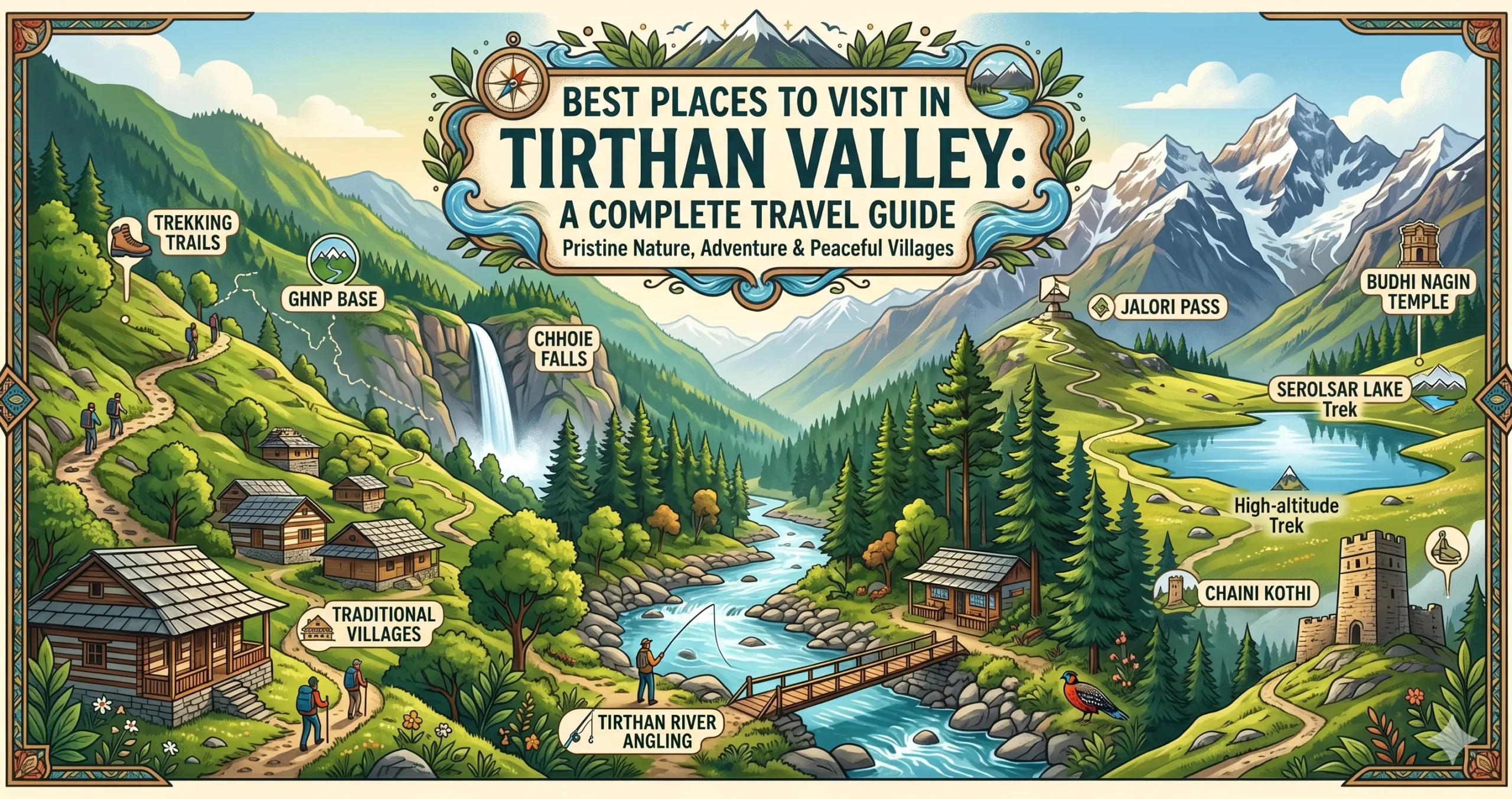
Looking for an offbeat destination in Himachal Pradesh? Tirthan Valley is the perfect escape. Located in the Kullu district, this picturesque Himalayan valley is renowned for its pristine river, charming villages, scenic trekking routes, and access to the UNESCO-listed Great Himalayan National Park. With its peaceful atmosphere and untouched natural beauty, Tirthan Valley offers a refreshing alternative to crowded tourist hotspots, making it an ideal destination for nature lovers, photographers, and adventure seekers alike.
Whether you’re a nature lover, trekker, photographer, or simply looking for a peaceful mountain retreat, Tirthan Valley has something for everyone. Here are the best places to visit in Tirthan Valley that deserve a spot on your itinerary.
1. Great Himalayan National Park (GHNP)
- Overview: The crown jewel of Tirthan Valley is the Great Himalayan National Park, a UNESCO World Heritage Site spread across more than 750 square kilometers of pristine Himalayan wilderness.
- Flora and Fauna: Home to rare wildlife species such as snow leopards, Himalayan brown bears, musk deer, and the endangered Western Tragopan, the park attracts wildlife enthusiasts and trekkers from around the world. The dense forests, alpine meadows, glacial streams, and remote mountain trails make it one of the most spectacular protected areas in India.
- Activities: Visitors can enjoy guided nature walks, camping experiences, birdwatching excursions, and multi-day trekking adventures deep into the park’s untouched landscapes.
2. Tirthan River
- Overview: The lifeline of the valley, the beautiful Tirthan River flows through picturesque villages, forests, and meadows, creating breathtaking scenery at every turn.
- Trout Fishing: The river is famous for trout fishing, particularly rainbow and brown trout, making it a favorite destination for anglers. Travelers can also spend hours relaxing by the riverside, enjoying picnics, photography, or simply listening to the soothing sound of flowing water.
- Adventure: Adventure enthusiasts can participate in activities such as river crossing and zipline experiences offered at several locations throughout the valley.
3. Jalori Pass
Overview: Located at an altitude of approximately 10,800 feet, Jalori Pass is one of the most scenic mountain passes in Himachal Pradesh.
Views and Surroundings: The drive to Jalori Pass itself is an unforgettable experience, passing through dense forests, winding roads, and panoramic viewpoints. Once at the top, visitors are rewarded with stunning views of snow-covered peaks, rolling meadows, and deep valleys stretching across the Himalayas.
Adventure: The pass serves as the starting point for several trekking trails, including the popular trek to Serolsar Lake. Due to heavy snowfall, the pass usually remains closed during peak winter months and reopens around March.
4. Serolsar Lake and Budhi Nagin Temple
Overview: A short trek from Jalori Pass leads to the enchanting Serolsar Lake, one of the most beautiful high-altitude lakes in the region.
Significance: Surrounded by thick oak forests, the lake is known for its crystal-clear waters and peaceful atmosphere. Local legends suggest that the waters possess medicinal qualities and are protected by divine forces.
Budhi Nagin Temple: Adjacent to the lake stands the sacred Budhi Nagin Temple, dedicated to the local serpent goddess. The spiritual significance, combined with the scenic beauty, makes this destination a must-visit for both nature lovers and pilgrims.
5. Chhoie Waterfall
Overview: Among the hidden gems of Tirthan Valley, Chhoie Waterfall offers a rewarding trekking experience and spectacular natural beauty.
The Trek: The trail begins from villages near Gushaini and takes approximately 35 to 45 minutes through dense forests and scenic mountain terrain. As visitors approach the waterfall, the sound of cascading water echoes through the valley, creating a magical atmosphere.
Experience: The waterfall is especially beautiful during the monsoon and post-monsoon seasons when water flow is at its peak. It is also a popular location for photography and nature walks.
6. Chehni Kothi
Overview: History enthusiasts should not miss a visit to Chehni Kothi, an impressive example of traditional Himalayan architecture.
Significance: Built using the ancient Kath-Kuni construction style, this towering structure once served as a watchtower and defensive fortification. Despite surviving major earthquakes over centuries, the building continues to stand as a testament to the remarkable engineering skills of local craftsmen.
The trek to Chehni Kothi passes through beautiful mountain villages, offering visitors a glimpse into traditional Himachali culture and rural life.
7. Gushaini
Gushaini is often considered the heart of Tirthan Valley and serves as the primary base for exploring the region.
Situated along the banks of the Tirthan River, this charming village is known for its peaceful riverside accommodations, trout fishing opportunities, and easy access to trekking routes leading into the Great Himalayan National Park.
The village’s relaxed atmosphere makes it an ideal destination for travelers seeking a quiet mountain getaway.
8. Sharchi Village
For those looking to experience the untouched side of Himachal Pradesh, Sharchi is a hidden treasure.
Located deep within the valley, the village remains largely untouched by mass tourism. Surrounded by dense forests, terraced fields, and snow-capped peaks, Sharchi offers breathtaking Himalayan views and authentic village experiences.
The peaceful environment makes it perfect for nature walks, photography, and escaping the crowds.
9. Jibhi
Jibhi has rapidly become one of the most popular destinations in the region while still retaining its rustic charm.
Known for its wooden cottages, pine forests, traditional architecture, and peaceful ambiance, Jibhi is often described as a fairytale village. Visitors can explore nearby attractions such as Jibhi Waterfall, Mini Thailand, Chehni Kothi, and Jalori Pass.
The village is especially popular among couples, backpackers, and remote workers seeking a tranquil mountain retreat.
Best Time to Visit Tirthan Valley
Tirthan Valley is a year-round destination, but each season offers a unique experience.
Spring to Early Summer (March to June)
This is the most popular time to visit Tirthan Valley. Pleasant temperatures, blooming landscapes, and clear mountain views make it ideal for sightseeing, trekking, fishing, and outdoor adventures.
- Temperature: Generally between 10°C and 24°C
- Best for: Trekking, camping, nature walks, and exploring villages
- Popular attractions such as Jalori Pass and Serolsar Lake are easily accessible
Autumn (September to November)
The post-monsoon season is considered one of the best times to visit due to fresh greenery, crystal-clear skies, and fewer tourists.
- Comfortable weather conditions
- Excellent visibility for photography
- Less crowded compared to peak summer months
- Ideal for peaceful vacations and trekking
Winter (December to February)
Winter transforms the valley into a quiet mountain retreat. Higher elevations receive snowfall, creating beautiful winter landscapes.
- Night temperatures can drop to 0°C–5°C
- Snowfall is common around Jalori Pass, Shoja, and nearby higher-altitude areas
- Some guesthouses and homestays may temporarily close
- Jalori Pass is usually snowbound and inaccessible during peak winter
Permits and Regulations
Great Himalayan National Park Entry Permit
Visitors planning to explore the Great Himalayan National Park must obtain an entry permit before entering the protected area.
- Permits are available at the Sai Ropa entry gate and the Tirthan Wildlife Range Office
- Local guides are recommended for longer treks within the park
- Entry fees may vary for Indian and foreign visitors
Trout Fishing Permit
Tirthan Valley is famous for trout fishing, but fishing without permission is not allowed.
- Fishing licenses can be obtained from the Himachal Pradesh Fisheries Department or Forest Department
- Fishing season generally runs from March 1 to October 31
- Catch-and-release practices are encouraged to preserve fish populations
Mobile Network Connectivity
While Tirthan Valley is relatively well connected, coverage varies depending on location.
Networks with Better Coverage
- Airtel offers reliable connectivity in most villages
- Jio works well in major tourist areas
- BSNL remains useful in some remote locations
Connectivity in Remote Areas
As you move deeper into the valley or begin trekking routes toward the Great Himalayan National Park, network signals may become weak or disappear entirely.
Visitors planning extended treks should inform family members beforehand and download offline maps.
ATM Availability and Cash Requirements
Carry Sufficient Cash
Although digital payments are becoming more common, cash remains important in many parts of Tirthan Valley.
- Small cafés, local shops, and homestays may not accept digital payments
- Mobile network issues can affect online transactions
Nearest Reliable ATMs
The most dependable ATMs are located in Banjar, which serves as the primary commercial center of the region.
Travelers should withdraw sufficient cash before heading to remote villages such as Gushaini, Sharchi, and nearby trekking areas.
Packing Essentials for Tirthan Valley
Warm Clothing
Even during summer, mornings and evenings can feel surprisingly cool.
Recommended items include:
- Light woolen sweater
- Windproof jacket
- Thermal wear during winter
- Rain jacket during monsoon season
Comfortable Footwear
Many attractions involve walking or short treks.
Carry:
- Trekking shoes
- Sports shoes with good grip
- Comfortable sandals for riverside walks
Electronics and Power Backup
Power outages and voltage fluctuations occasionally occur in remote villages.
Useful items include:
- Power bank
- Mobile charger
- Camera batteries
- Universal charging adapter
- Surge protector for sensitive electronics
Important Navigation Tip: The Aut Junction
One of the most important things first-time visitors should know is how to navigate correctly at Aut.
If you are driving from Chandigarh, Delhi, or Mandi toward Tirthan Valley via NH-3, you will reach the town of Aut before entering the Kullu Valley.
Do not enter the Aut Tunnel if your destination is Tirthan Valley.
Instead:
- Take the right turn at Aut toward Banjar and Gushaini.
- The tunnel continues directly toward Kullu and Manali.
- Missing this turn can add significant travel time to your journey.
Using GPS navigation is recommended, but it is still helpful to keep this junction in mind, especially during road trips.
Travel Tip
For the best overall experience, plan your Tirthan Valley trip between March–June or September–November, carry enough cash, keep warm clothing handy, and ensure you have permits arranged if you’re planning to enter the Great Himalayan National Park or enjoy trout fishing. These small preparations can make your Himalayan getaway much more comfortable and enjoyable.
Frequently Asked Questions (FAQs) About Tirthan Valley
1. Where is Tirthan Valley located?
Tirthan Valley is located in the Kullu district of Himachal Pradesh, approximately 500 km from Delhi and around 260 km from Chandigarh. The valley lies near the Great Himalayan National Park and is named after the Tirthan River.
2. What is Tirthan Valley famous for?
Tirthan Valley is famous for its pristine rivers, trout fishing, scenic villages, trekking trails, waterfalls, and access to the Great Himalayan National Park. It is also known for its peaceful atmosphere and offbeat travel experiences.
3. What is the best time to visit Tirthan Valley?
The best time to visit Tirthan Valley is from March to June and September to November when the weather is pleasant and ideal for sightseeing, trekking, and outdoor activities. Winter visitors can enjoy snowfall in nearby higher-altitude areas.
4. How many days are enough for Tirthan Valley?
A 3 to 4-day trip is ideal for exploring major attractions such as Jibhi, Jalori Pass, Serolsar Lake, Chhoie Waterfall, and the Great Himalayan National Park.
5. Is Tirthan Valley better than Manali?
Tirthan Valley is ideal for travelers seeking peace, nature, and fewer crowds, while Manali offers more commercial tourism, nightlife, and adventure activities. The choice depends on your travel preferences.
6. Can I visit Jalori Pass throughout the year?
No. Jalori Pass is usually closed during heavy snowfall from December to February. It generally reopens in March, depending on weather and road conditions.
7. Is Tirthan Valley suitable for family trips?
Yes, Tirthan Valley is an excellent destination for families. Its calm environment, scenic beauty, comfortable homestays, and easy nature walks make it suitable for travelers of all ages.
8. Are there adventure activities in Tirthan Valley?
Yes. Popular adventure activities include trekking, camping, trout fishing, river crossing, rock climbing, birdwatching, and nature exploration in the Great Himalayan National Park.
9. How do I reach Tirthan Valley?
The nearest airport is Kullu-Manali Airport (Bhuntar), about 50 km away. The closest major railway station is Chandigarh. By road, Tirthan Valley is well connected via Aut and Banjar from Chandigarh, Delhi, and other nearby cities.
10. Which are the best villages to stay in Tirthan Valley?
The most popular places to stay are Jibhi, Gushaini, Banjar, and Sharchi. These villages offer beautiful mountain views, riverside accommodations, and easy access to major attractions.
11. Is trout fishing allowed in Tirthan Valley?
Yes, trout fishing is a popular activity in Tirthan Valley. However, visitors need to obtain the required permits from local authorities before fishing.
12. Is Tirthan Valley safe for solo travelers?
Yes, Tirthan Valley is generally considered safe for solo travelers, including solo female travelers. The local community is welcoming, and the region has a relaxed, peaceful atmosphere.
13. What are the must-visit places near Tirthan Valley?
Some nearby attractions include Jibhi, Jalori Pass, Serolsar Lake, Chehni Kothi, Chhoie Waterfall, Shoja, and the Great Himalayan National Park.
14. Does Tirthan Valley receive snowfall?
Yes, higher-altitude areas around Jalori Pass, Serolsar Lake, and Shoja receive snowfall during winter. Lower villages like Gushaini and Banjar may receive occasional snowfall during particularly cold periods.
15. Is mobile network connectivity available in Tirthan Valley?
Most major networks, including Jio, Airtel, and BSNL, work in villages like Jibhi, Banjar, and Gushaini. However, connectivity may be limited in remote areas and trekking routes inside the Great Himalayan National Park.